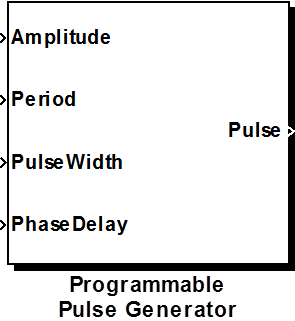
Programmable Pulse Generator using Simulink's basic blocks
The proposed Pulse Generator offers full tunability of its parameters on runtime.

You are now following this Submission
- You will see updates in your followed content feed
- You may receive emails, depending on your communication preferences
Cite As
Syed Kazmi (2026). Programmable Pulse Generator using Simulink's basic blocks (https://www.mathworks.com/matlabcentral/fileexchange/35922-programmable-pulse-generator-using-simulink-s-basic-blocks), MATLAB Central File Exchange. Retrieved .
General Information
- Version 1.0.0 (11.1 KB)
MATLAB Release Compatibility
- Compatible with any release
Platform Compatibility
- Windows
- macOS
- Linux
| Version | Published | Release Notes | Action |
|---|---|---|---|
| 1.0.0 |

