Moving Coil Speaker
R2026bMoving Coil Speaker block

To add a block to a model, double-click the canvas and start typing the block name. Then, select the block from the list.
Libraries:
Simscape Acoustics /
Applications /
Moving Coil Speakers
Description
Add-On Required: This feature requires the Simscape Acoustics add-on.
This block models the electrical, mechanical, and acoustic elements of a moving coil loudspeaker. The block has electrical conserving ports for the electrical signal that drives the voice coil, acoustic conserving ports for the speaker radiation and enclosure, and an optional mechanical translational conserving port for the mass of the nonmoving speaker components.
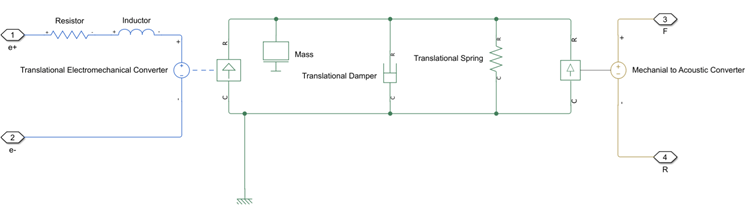
The Moving Coil Speaker block models the physical properties of a loudspeaker by implementing an equivalent circuit using Simscape™ blocks from the electrical, mechanical translational, and acoustic domains. By default, the block models a linear moving coil speaker. The figure shows the equivalent circuit using the following Simscape blocks in each domain:
Electrical: The Moving Coil Speaker block models heating losses in the voice coil using a Resistor (Simscape) block. The block models magnetic energy stored from the coil turns using an Inductor (Simscape) block. The resistance and inductance values depend on wire material, diameter, length, turn radius, number of turns, and other physical properties of the modeled speaker.
Mechanical Translational: The Moving Coil Speaker block models the total mass of the moving speaker using a Mass (Simscape) block. The block models speaker stiffness using a Translational Spring (Simscape) block. Mechanical friction in the speaker is modeled using a Translational Damper (Simscape) block.
Transducers: Current through the voice coil creates a magnetic force that moves the speaker cone. The Moving Coil Speaker block models this interaction using a Translational Electromechanical Converter (Simscape) block. Cone movement causes compression and rarefaction in air molecules. The block models this interaction using a Mechanical to Acoustic Converter block.
You can also use the Moving Coil Speaker block to model the following physical properties of a moving coil speaker:
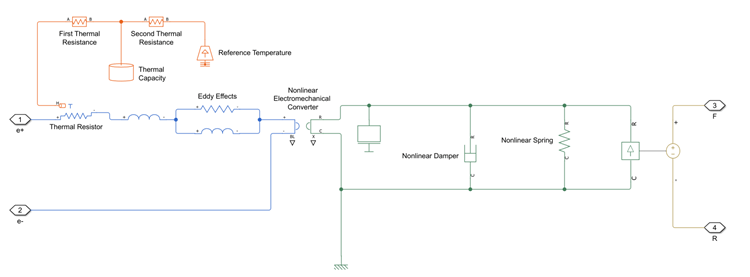
Electrical effects caused by eddy currents in conductive elements of the loudspeaker near the voice coil
Nonlinearities in the electromechanical converter
Mechanical nonlinearities caused by stiffness in the speaker suspension
Mechanical nonlinearities caused by damping from viscous friction
Electrical and electromagnetic effects caused by temperature changes in the speaker
Each additional physical property you model changes the equivalent circuit that the block implements. The figure shows the equivalent circuit of a moving coil speaker with all of the physical properties from the list. The labeled Simscape blocks indicate changes from the linear equivalent circuit.
Examples
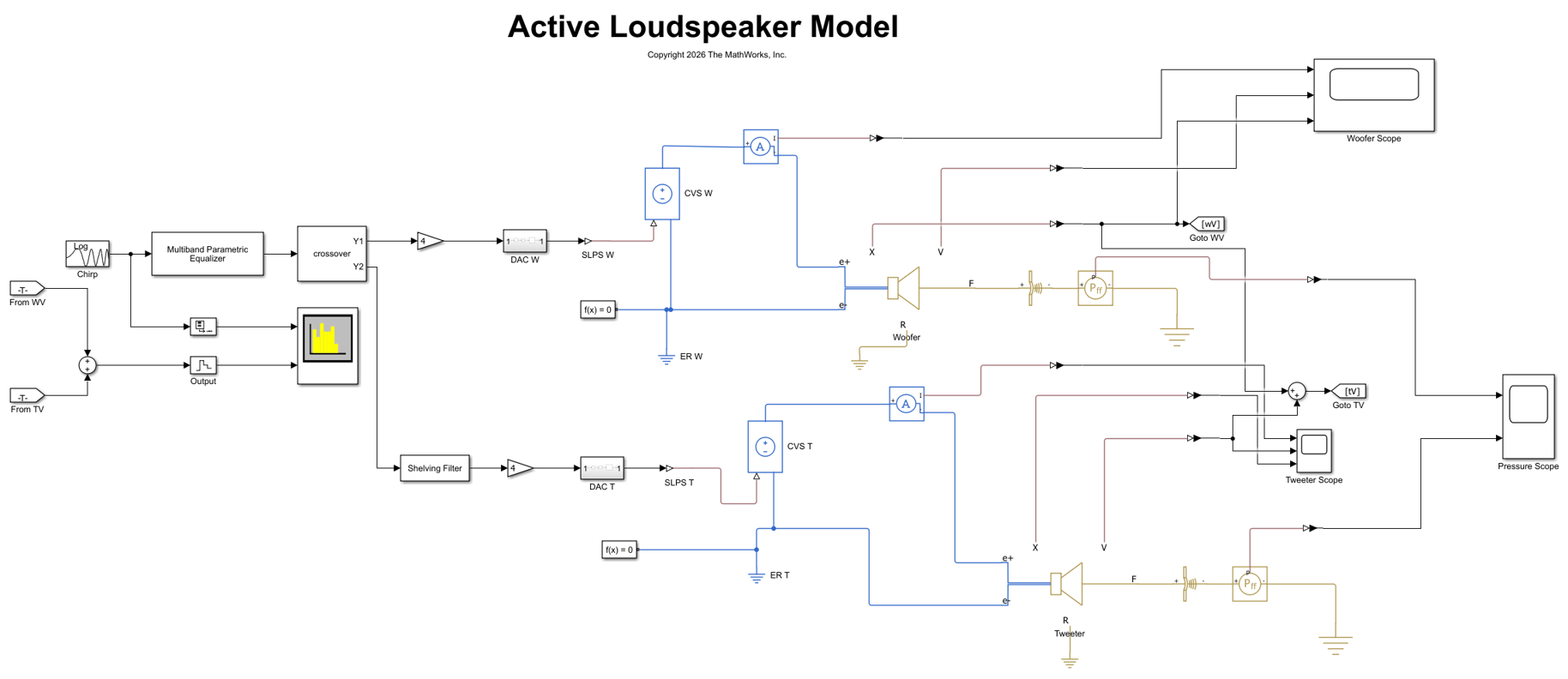
Loudspeaker Modeling with Simscape Acoustics
Model a dynamic loudspeaker using linear and non-linear lumped element models.
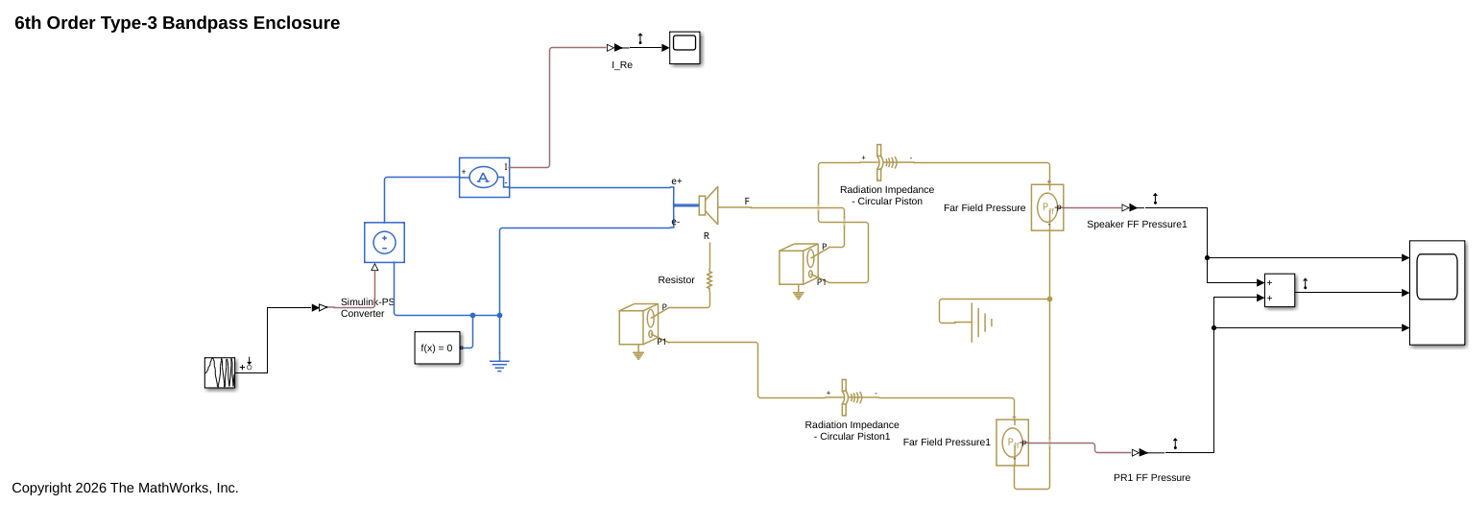
Loudspeaker Enclosure Modeling with Simscape Acoustics
Simulate different types of loudspeakers using Simscape Acoustics.
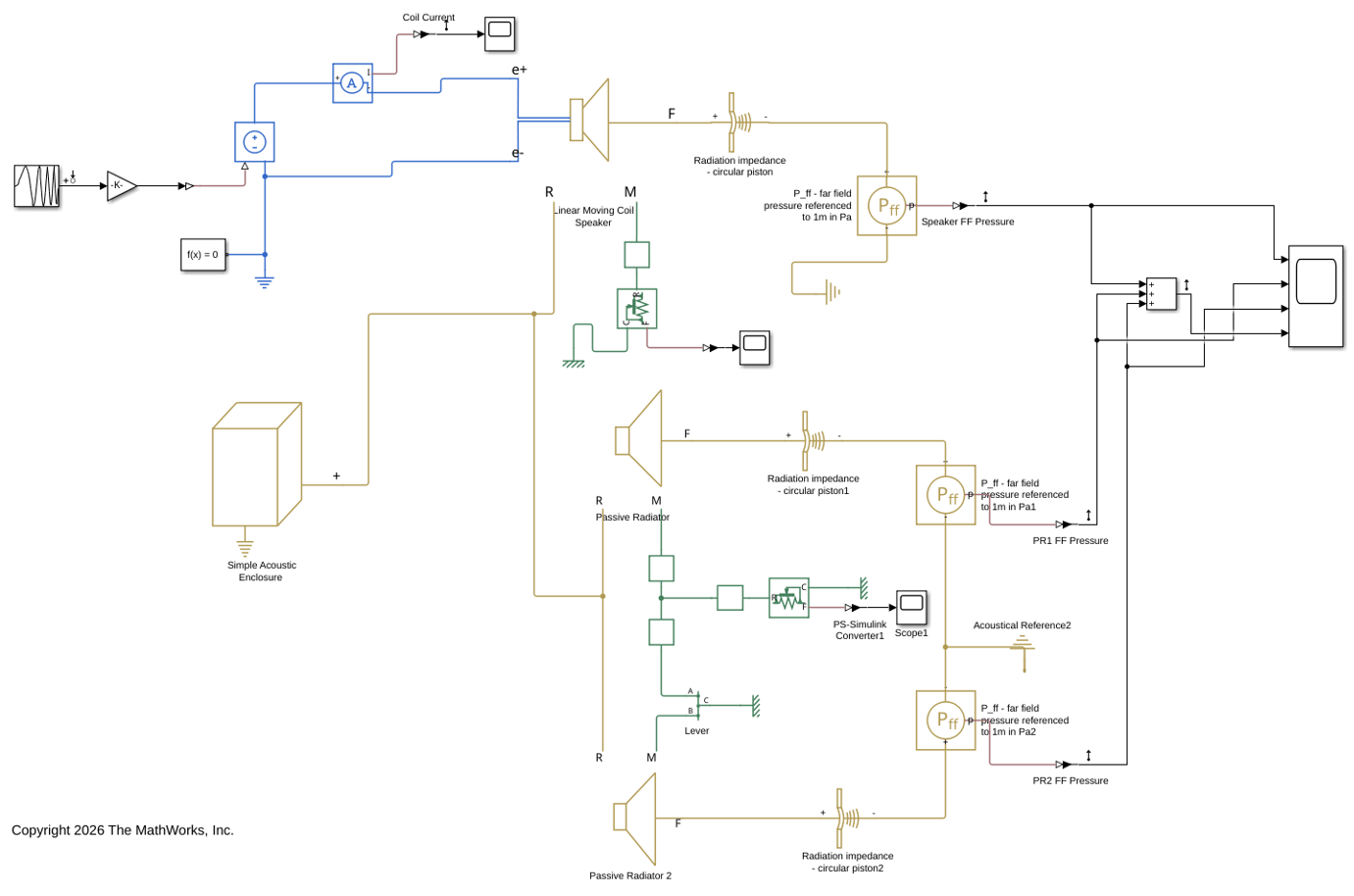
Dual Passive Radiator Subwoofer Modeling with Simscape Acoustics
Simulate a dual passive radiator subwoofer in Simscape Acoustics.
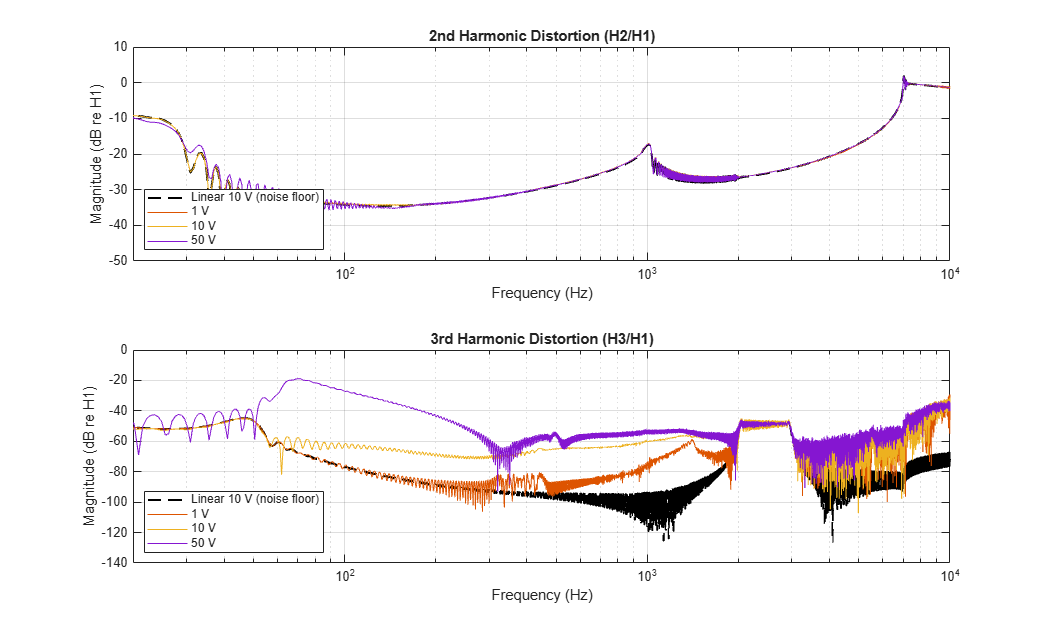
Measuring Loudspeaker Nonlinearities Using Swept Sine Excitation
Simulate and measure loudspeaker nonlinearities using impzest, sweeptone, and Simscape Acoustics.
Ports
Output
Conserving
Parameters
Version History
Introduced in R2026b

