HDL Code Generation, Verification, and Deployment
R2026bAfter simulating your designs using Wireless HDL Toolbox™ blocks, the next steps are to generate HDL code, verify the generated code, and deploy to hardware. To generate HDL code from designs that use the hardware-friendly Wireless HDL Toolbox blocks, you must have an HDL Coder license. HDL Coder also enables you to generate scripts and test benches for use with third-party HDL simulators.
If you have an HDL Verifier license, you can cosimulate a Simulink® model with an HDL design running in a third-party simulator, and generate reference models for your designs.
If you have an SoC Blockset for AMD license, you can use the FPGA-in-the-loop (FIL) feature to prototype your HDL design on an FPGA board.
To design, prototype, and verify practical wireless communications systems on hardware, including running FPGA-in-the-loop (FIL) to prototype your HDL design on an FPGA board, use the HDL Coder and SoC Blockset for AMD products and SoC Blockset Support Package for AMD FPGA and SoC Devices or HDL Coder Support Package for Intel® FPGA and SoC Devices. The FIL blocks provide efficiency improvements for streaming data across the interface between Simulink and the FPGA board.
Blocks
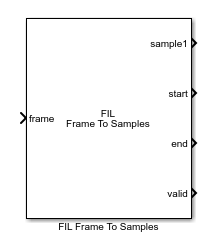 | FIL Frame To Samples | Convert frame-based data to sample stream for FPGA-in-the-loop |
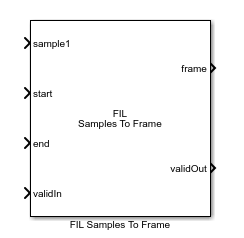 | FIL Samples To Frame | Convert sample stream from FPGA-in-the-loop to frame-based data |
Topics
- HDL Code Generation Support
Find supported blocks, and implement streaming interface in HDL.
- Generate HDL Code
Generate HDL code from Simulink subsystems.
- FPGA-in-the-Loop
Real-time design verification of communications systems with FPGAs.
- Prototype Wireless Communications Algorithms on Hardware
Prototype Wireless HDL Toolbox designs on AMD® Zynq®-based boards using hardware support packages.
Related Information
Featured Examples
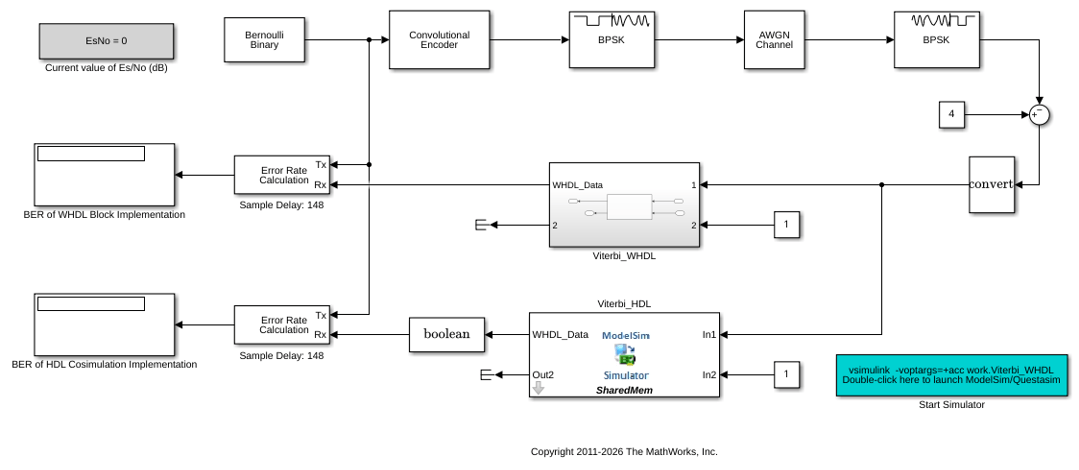
Verify Viterbi Decoder Using HDL Cosimulation
Generate and verify HDL code to implement a fixed-point Viterbi decoder.

Verify 5G Wireless Applications Using SystemVerilog DPI
Use SystemVerilog DPI components to verify 5G wireless applications in an HDL environment.
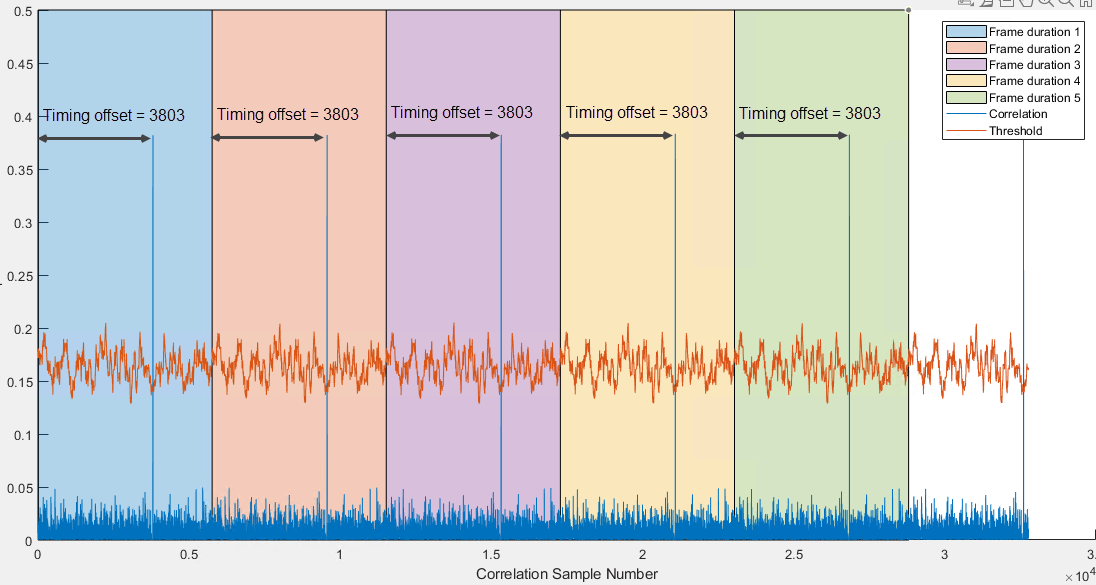
Verify OFDM Transmit and Receive Using FPGA Data Capture
Verify OFDM transmit and receive using FPGA data capture.
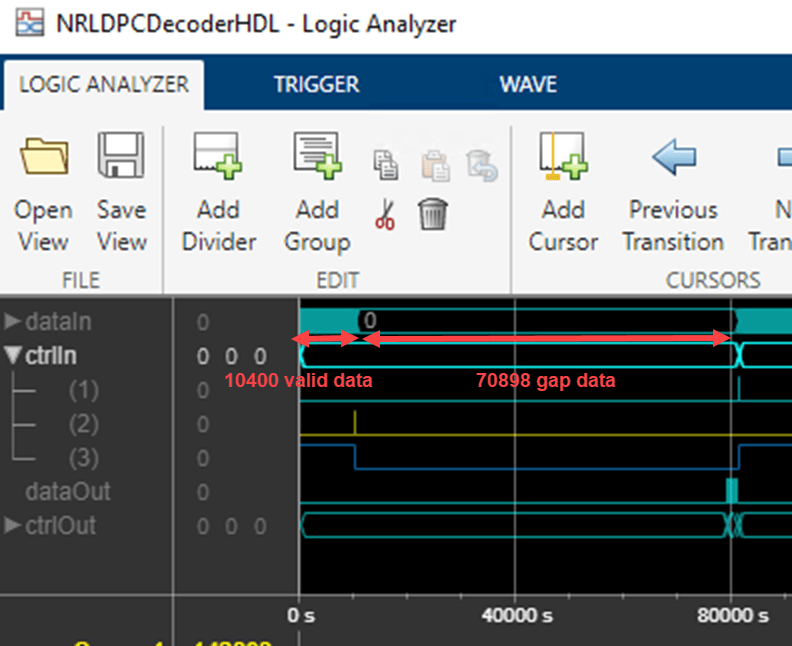
Accelerate NR LDPC Decoder for Streaming Data Using FPGA-in-the-Loop
Accelerate simulation of NR LDPC Decoder from Simulink by using FIL in free-running mode for 5G NR streaming data.
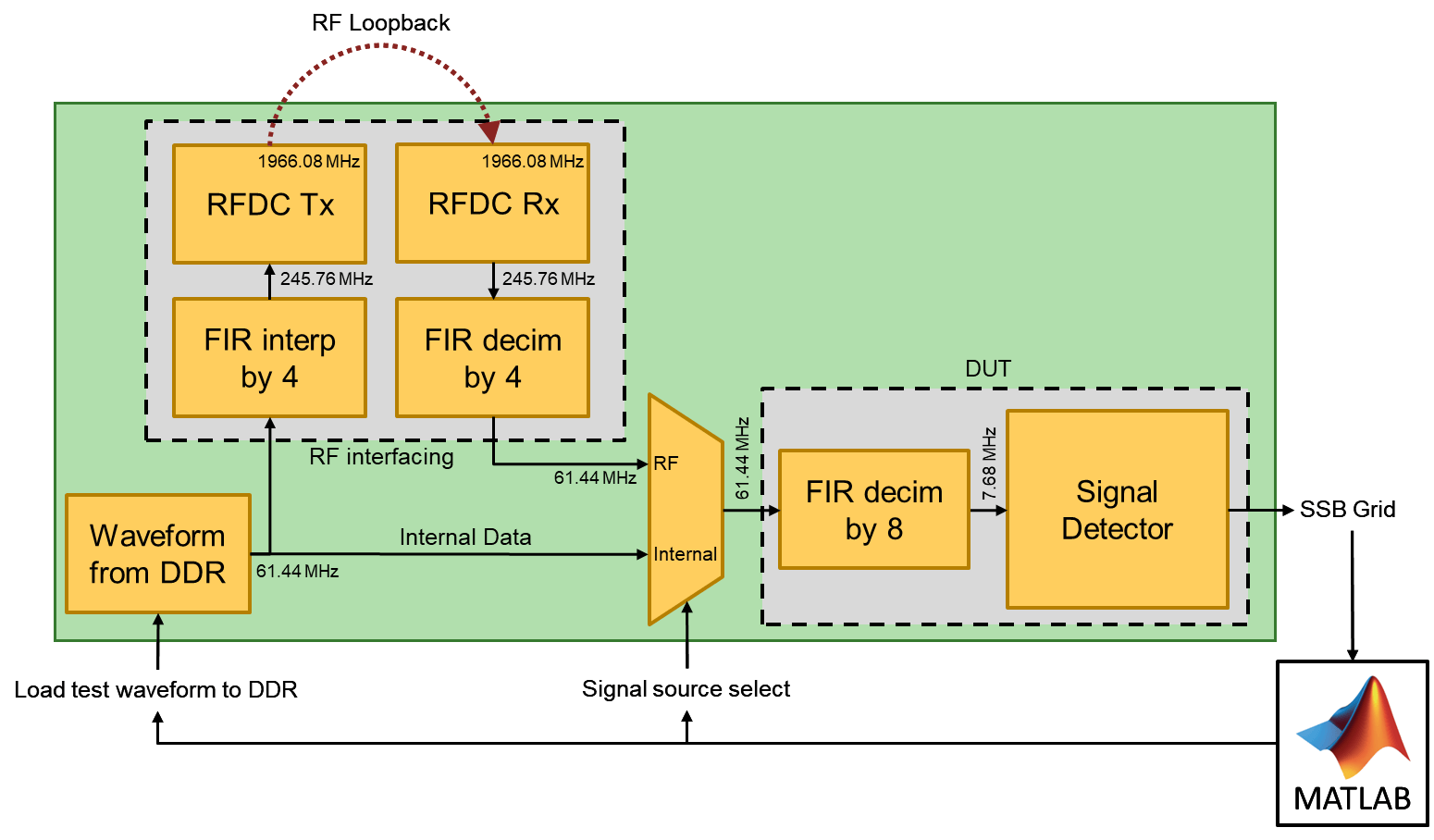
Introduction to 5G NR Signal Detection using AMD RFSoC
Deploy primary synchronization signal (PSS) correlation and synchronization signal block (SSB) demodulation using SoC Blockset for AMD on Xilinx® RFSoC device.
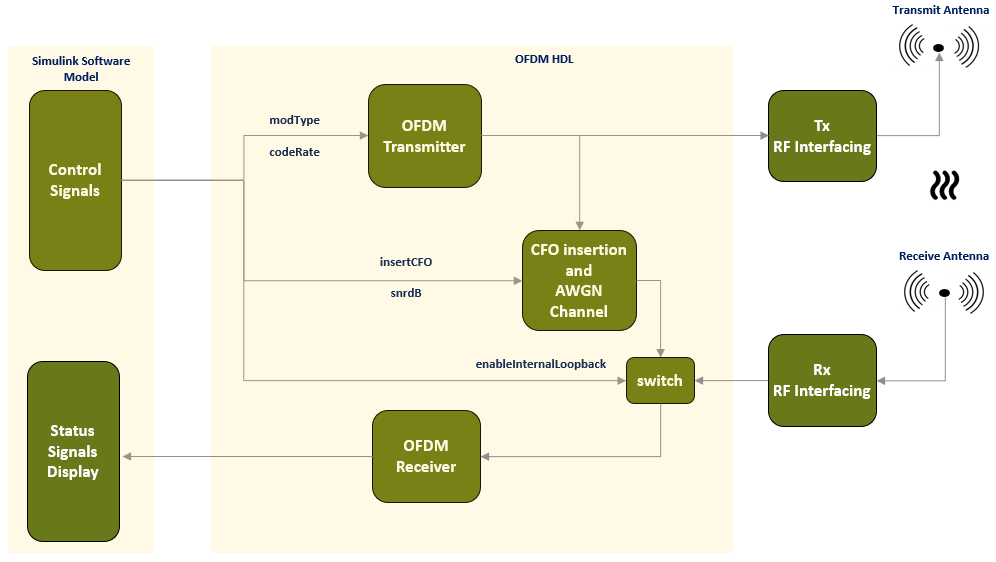
OFDM Transmit and Receive Using AMD RFSoC Device
Simulate and deploy OFDM transmit and receive algorithm using SoC Blockset for AMD on Xilinx RFSoC device.
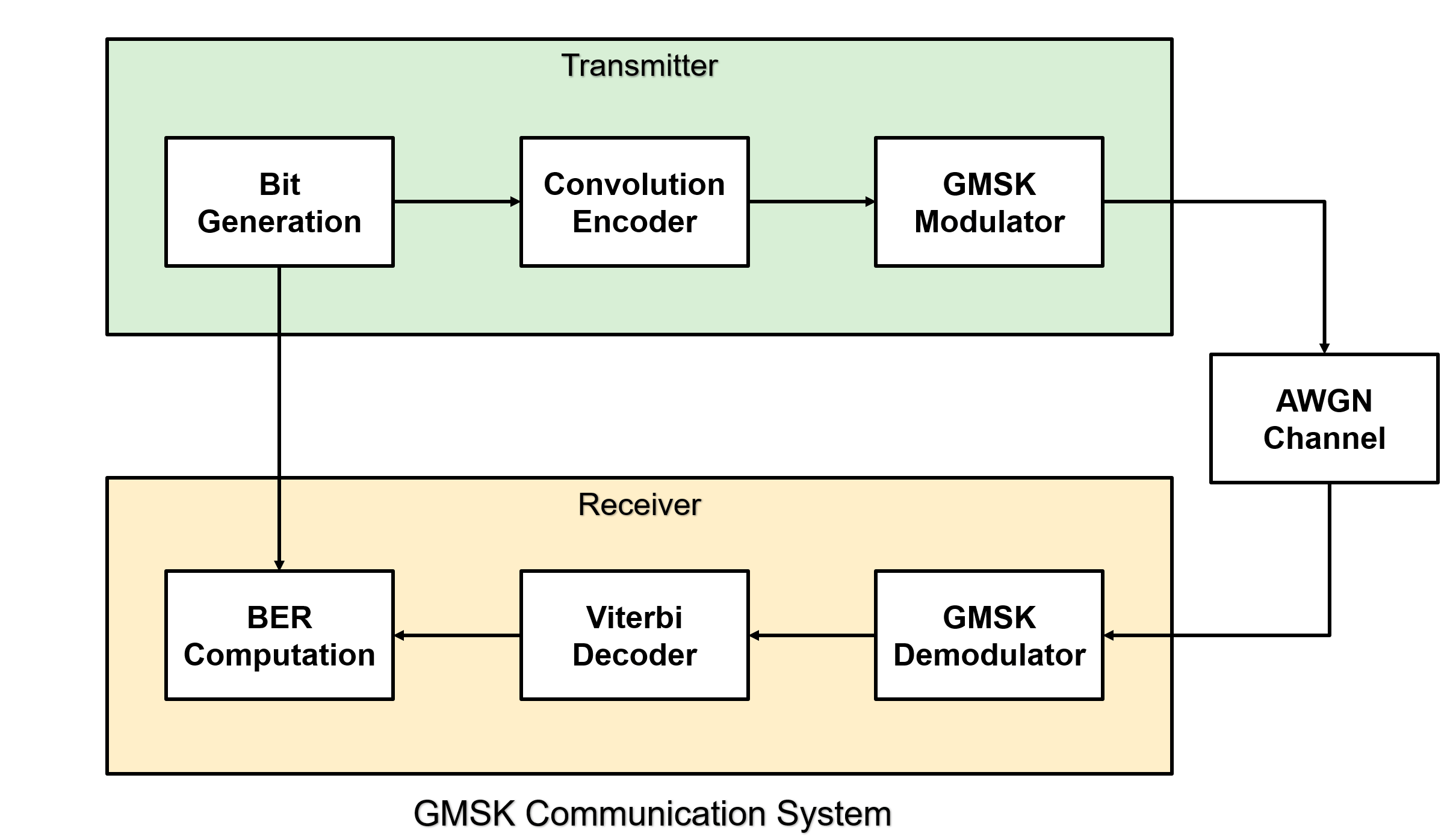
Accelerate BER Simulations of GMSK System Using FPGA-in-the-Loop Workflow
Accelerate BER simulations of GMSK system using FPGA-in-loop workflow.

